Turn a compact outdoor space into a leafy, comfortable garden with smart planting, flexible furniture, and a layout that makes every corner useful.
A small garden can feel generous when every choice has a purpose. You do not need to fill the patio with tiny furniture and rows of little pots. A few well-scaled pieces, layered planting, and one clear place to sit will often make the space feel calmer and more complete.
Start with the conditions you already have. Notice where the sun falls, which corners stay damp, how you move from the door to the seating area, and what you want to do outside. These small garden design ideas will help you shape a patio or courtyard around real daily use.
1. Decide what the garden needs to do first
Choose the main job before you buy plants or furniture. You might want a place for morning coffee, a leafy view from the kitchen, a dining spot, or a quiet corner for reading. Let that priority claim the best part of the space.
Other functions can fit around it. A bench can include storage, herbs can grow beside the dining table, and a planted boundary can improve the view from indoors. One clear priority prevents a compact garden from becoming a collection of unrelated ideas.

2. Use fewer, larger planters
A crowd of small pots can make a patio feel busy and takes longer to water. Replace some of them with two or three substantial containers that have enough presence to anchor the layout.
Plant each large pot with a tall focal plant, softer foliage, and something that trails over the edge. Check the mature size and root needs before combining plants. A restrained group will look lush without swallowing the floor.

3. Build one vertical garden feature
Use a wall or fence when floor space is scarce. A trellis, slatted panel, wall-mounted planter system, or narrow shelf can hold greenery above the main circulation route.
Keep the structure simple enough to maintain. Leave access for watering, choose fixings suitable for the wall, and check the weight once containers are full of wet compost. One well-planned vertical feature creates more impact than scattered hooks and pots.

4. Layer plants from low to tall
Arrange containers as you would arrange a room. Place low plants near the front, medium foliage through the middle, and one taller shrub, grass, or small tree at the back. The change in height creates depth within a shallow footprint.
Repeat one leaf shape or color through the layers. The repetition will connect different plants and keep the display from looking random. Leave gaps so each plant has room to grow.

5. Add one slender tree for height
A narrow tree can give a courtyard a ceiling of leaves without taking over the ground. Look for a variety suited to containers, your climate, and the amount of sun the space receives.
Choose the pot with long-term stability in mind. A broad, heavy container helps support the tree, while a simple underplanting softens the base. Position it where the canopy will frame the view rather than block the doorway.

6. Run a built-in bench along one edge
A bench uses a boundary more efficiently than several freestanding chairs. It can turn an awkward wall into a comfortable destination and leave the middle of the patio open.
Add seat pads that you can store indoors or inside a dry compartment. Keep the back simple if plants will grow behind it. A small movable stool or side table can serve drinks without crowding the bench.

7. Choose furniture that can change jobs
A folding bistro table, nesting stools, or a lightweight chair gives you options when space is tight. You can open the layout for guests, then return it to a simple everyday arrangement.
Measure the furniture with chairs pulled out, not tucked neatly under the table. Keep the main route from the house clear. A piece that looks compact in a photograph may still feel awkward if you have to squeeze around it.

8. Repeat one material across the pots
Containers do not need to match, but they benefit from a common thread. Repeat terracotta, dark glazed ceramic, aged zinc, or a single painted color across different shapes and sizes.
The shared material will give the garden rhythm while allowing individual plants to vary. Limit novelty pots to one or two favorites. The planting should remain the main attraction.

9. Soften a fence with climbers
Climbing plants can turn a plain boundary into a green backdrop. Train them across wires, a trellis, or a freestanding support so you can guide new growth and reach the plant for pruning.
Choose a climber that suits the wall’s light, available root space, and the amount of maintenance you want. Keep growth away from gutters, vents, and fragile surfaces. A controlled green layer feels more considered than a boundary hidden under unchecked growth.

10. Create a diagonal sight line
Looking across a square patio from corner to corner makes the distance feel longer. Angle a bench, position a statement pot off-center, or lay paving so the eye travels diagonally through the space.
Do not force every object onto the angle. One directional cue is enough. Keep doors and main walkways straight and easy to use.
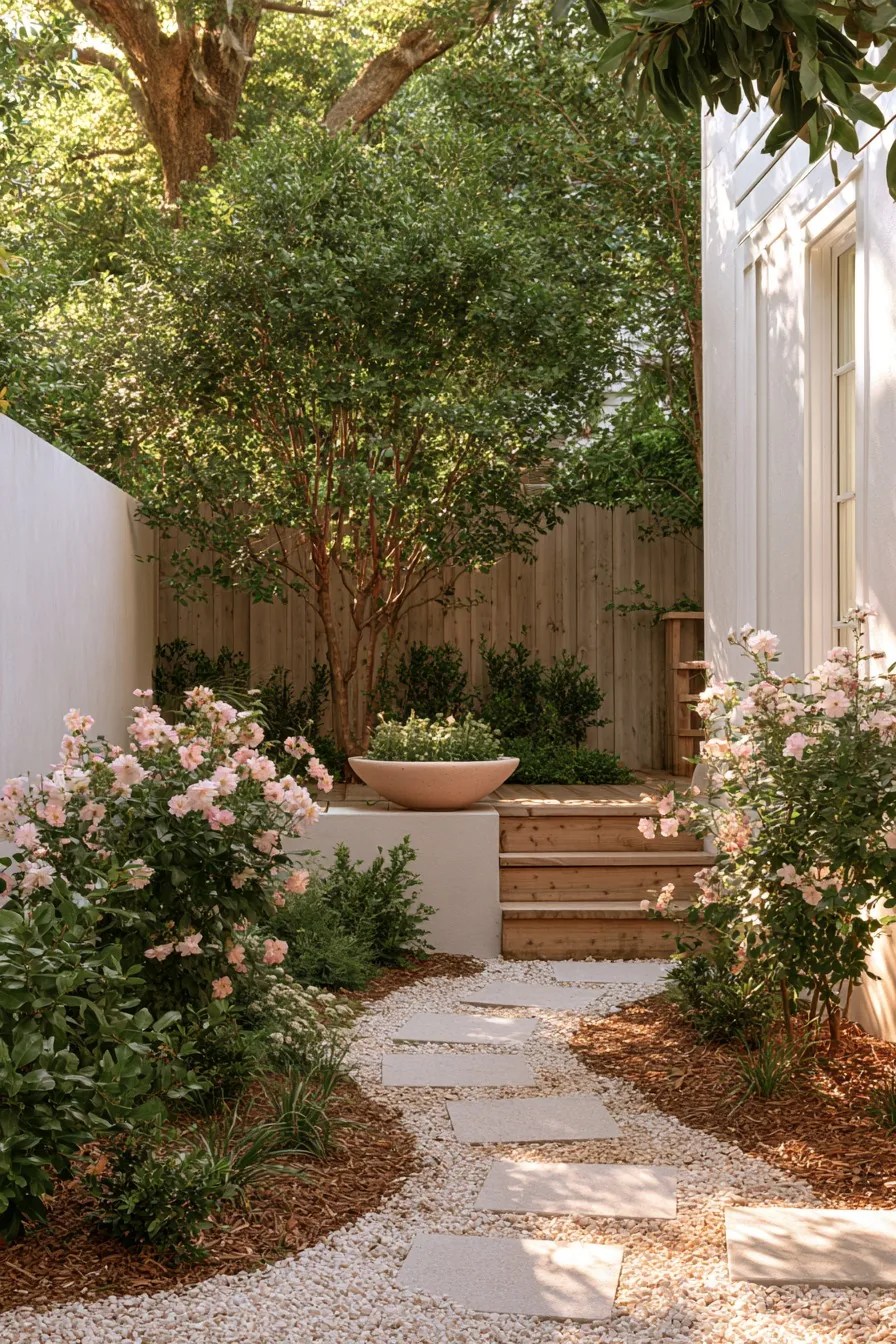
11. Break up paving with pockets of planting
A fully paved courtyard can feel hard, especially when the boundaries are high. Remove selected pavers where suitable, use narrow edge beds, or place generous containers where they interrupt the largest uninterrupted surfaces.
Check drainage and underground services before changing permanent paving. If you rent, large troughs can create a similar effect without structural work. Let some foliage spill over the hard edge to blur the line.

12. Start with foliage, then add flowers
Leaves provide shape and color for longer than a brief flush of flowers. Combine fine grasses, broad leaves, rounded shrubs, and trailing plants to create contrast before deciding where blooms should go.
Use flowers as highlights rather than filling every pot with competing color. A repeated coral, lilac, white, or yellow bloom can move the eye around the garden and connect separate containers.

13. Let one statement pot lead the scheme
Choose one container with a strong shape, glaze, or scale and give it a position where you see it from the house. Use a plant with a clear silhouette so the combination reads as one focal point.
Keep the surrounding pots quieter. Echo one color from the statement piece in a cushion, flower, or smaller container. The repetition makes a bold choice feel connected rather than dropped into the garden.

14. Fit a narrow raised bed against a wall
A slim raised bed can hold more soil than a row of individual pots while preserving the center of the patio. It works well for herbs, compact vegetables, grasses, or a layered ornamental border.
Choose a depth that suits the roots you plan to grow and make sure excess water can drain safely. Keep the bed narrow enough to reach the back without stepping into it.

15. Put herbs close to the kitchen door
Herbs earn their place when you can reach them during cooking. Group the ones you use most in a trough, tiered stand, or a cluster of medium pots near the door.
Match each herb to the available sun and watering needs instead of forcing every variety into one container. Keep mint in its own pot if you do not want it to spread. A practical herb corner can still look decorative when the containers share a material.

16. Use a decorative screen to hide an awkward view
A slatted timber panel, perforated metal screen, or outdoor curtain can disguise bins, neighboring windows, or a plain utility corner. Treat it as part of the design instead of an afterthought.
Leave enough airflow and access for anything stored behind it. Repeat the screen material in a planter or small piece of furniture so it belongs to the wider scheme.

17. Make the far corner a destination
Give the eye a reason to travel to the end of the space. Place a chair, bench, sculptural pot, or cluster of foliage in the farthest visible corner.
A narrow path of pavers or gravel can lead toward it without dividing the garden into tiny zones. Keep the destination simple. The sense of arrival matters more than the number of objects.

18. Add lighting at several low levels
Use wall lights, portable table lamps rated for outdoor use, or small lights tucked near planting. Low pools of light make a courtyard feel comfortable after sunset without flooding the whole space.
Light the places where you sit and walk first. Aim fittings away from neighboring windows and avoid harsh glare at eye level. A warm glow on leaves and walls will reveal more texture than one bright overhead fitting.

19. Hide tools inside useful furniture
Look for a bench, low cabinet, or weather-resistant box that can store cushions, watering equipment, and small tools. Closed storage keeps practical items close without leaving them in the main view.
Choose a piece that fits the scale of the garden and can handle local weather conditions. A shallow cabinet against a wall often uses less valuable floor area than a deep freestanding box.

20. Include a small water feature
A water bowl or compact recirculating fountain can introduce reflection and movement without requiring a pond. Place it where you can see it from the main seat and reach it for cleaning.
Choose a design that suits the garden’s scale. Keep the water maintained and follow the maker’s instructions for pumps, outdoor power, and winter care. One simple vessel will feel calmer than a collection of miniature ornaments.

21. Choose plants for the actual conditions
Watch the garden across a full day before shopping. A courtyard may receive strong midday sun, reflected heat, deep shade, wind tunnels, or very little rainfall beneath an overhang.
Use those conditions to narrow the plant list. Group plants with similar water needs and keep thirsty containers where you will notice them. A suitable plant will contribute more to the design than a fashionable one that struggles in the space.

22. Keep some structure through the year
Evergreen shrubs, clipped forms, grasses, architectural leaves, and attractive bare stems can hold the design together between flowering seasons. Use them as the framework, then layer seasonal color around them.
You do not need every plant to stay unchanged. One or two dependable shapes will keep the patio from looking empty while other containers rest or change.

23. Leave part of the floor clear
Open floor space gives the planting and furniture room to register. It also makes watering, sweeping, and moving chairs easier. Resist the urge to fill every edge once the first plants arrive.
Photograph the garden from the doorway. If the layout looks like a solid wall of objects, remove or combine a few containers. A deliberate gap can make the remaining plants look fuller.

24. Carry an indoor color into the garden
Repeat a color from the adjoining room on outdoor cushions, pots, or flowers. A soft coral, deep green, dusty pink, or cobalt accent can connect the view through an open door.
Use the color in two or three places rather than on every surface. The garden will feel related to the home while keeping its own texture and character.

25. Plan one place for seasonal changes
Reserve a pot, tabletop, or small group near the door for plants and details that change through the year. You can refresh that one area without rebuilding the whole garden.
Keep the main furniture and structural planting steady. A controlled seasonal spot gives you variety while protecting the calm layout you worked to create.

How to plan a small garden without overcrowding it
Draw the fixed boundaries first, including doors, steps, drains, and the route you use most. Add the largest item next, whether that is a bench, dining table, raised bed, or tree. Place smaller pots only after the main layout works.
Use fewer materials than you think you need. One paving surface, one repeated container material, and a focused plant palette can make a compact garden feel settled. Add detail through leaf shape, textiles, and a few personal pieces.
Frequently asked questions
How do I make a small garden look bigger?
Keep a clear route through the space, build planting upward, and use a diagonal view toward one focal point. Fewer large containers often create a calmer sense of scale than many tiny pots.
What plants work best in a small courtyard?
The best choices depend on sunlight, wind, temperature, drainage, and your local climate. Start with those conditions, then combine one or two structural plants with softer foliage and seasonal color.
How can I add privacy without losing too much space?
Use slim trellis panels, trained climbers, a narrow screen, or tall planters placed only where the sight line needs blocking. Check local rules before adding height to a boundary.
How do I make a small patio feel cozy rather than cramped?
Give the space one clear purpose, use furniture that fits with room to move around it, and layer light and planting along the edges. Leave part of the floor visible so the layout can breathe.